

Kids Room Interior Design
How to Zone a Kids Bedroom for Sleep, Study, and Playtime

A kids bedroom has to work harder than almost any other room in a Dubai home. It is where your child sleeps, does homework, reads, builds, plays and, on busy weekends, hosts friends. When all of that happens in one open space with no structure, the bed turns into a desk, the desk disappears under toys, and bedtime becomes a daily battle.
Learning how to zone a kids bedroom solves most of these problems without needing a bigger room. By giving every activity its own clearly defined area, you help your child switch between rest, focus and fun with far less friction. Our team delivers kids room interior design in Dubai for apartments and villas of every size, and the zoning principles below are the same ones we use on real family projects.
Why Zoning Makes a Kids Room Functional
If you have ever wondered how to make a kids room functional, zoning is the answer. Children respond well to visual cues. When the sleeping area looks calm and the play area looks lively, the room itself tells them what kind of behaviour belongs where. That separation supports better sleep routines, longer focus during homework and quicker clean-up after play.
Zoning also makes a small room feel bigger. A clear bedroom floor plan with defined activity zones reads as organised, while the same furniture scattered around the room feels cramped.
Planning a Kids Bedroom? Let Us Design It Around Your Child!
The Zoom Interiors & Contracting designs kids bedrooms, nurseries and shared rooms across Dubai, from compact apartment rooms to spacious villa suites, and we are here to help you create a space that works for sleep, study and play.
How to Zone a Kids Bedroom With a Layout Plan
Every good kids bedroom layout starts on paper. Before buying any furniture, measure the room and sketch a simple bedroom floor plan. Mark the door, windows, air conditioning vents, sockets and any built-in wardrobes. These fixed points decide where each zone can realistically go.
As a general rule, place the sleeping area in the quietest corner, away from the door and out of the direct path of the AC. Put the study zone near the best natural light, ideally with the window to the side of the desk so there is no glare on screens. The play area then takes the most open floor space, usually in the centre of the room or near the door where it is easy to tidy into storage.
Think about age-appropriate design at this stage too. A toddler needs plenty of open floor and low storage, a primary school child needs a proper desk, and a teenager wants more privacy and somewhere to hang out with friends. Planning zones that can shift as your child grows saves money later.
How to Set Up a Kids Bedroom for Sleep, Study and Play
Once the plan is ready, look at each zone in detail. Here is how to set up a kids bedroom for sleep, study and play so that every area does its job well.
1. The Sleeping Area
The sleeping area should be the calmest part of the room. Use soft, muted colours on the wall behind the bed, blackout curtains or blinds to handle the early Dubai sunrise, and warm bedside lighting on a dimmer. Keep screens, noisy toys and bright storage bins out of sight from the pillow.
Positioning matters as well. Many children sleep better when the bed is set against a wall rather than floating in the middle of the room, as it feels more secure. A padded headboard, a canopy or a cosy alcove can turn the bed into a small retreat that clearly signals rest.
2. The Study Zone
When parents ask how to arrange a kids bedroom with a desk, our first advice is to keep the desk facing a wall or window, not the bed or the toys. This cuts down on distractions and creates a clear mental switch into homework mode.
Choose a desk at least 100 to 120 cm wide so there is room for books and a laptop, and pair it with an adjustable chair that will fit your child for years. Add a task lamp, a pinboard or magnetic wall for timetables, and closed shelves above the desk for school supplies. Wall-mounted shelving keeps the desktop clear without eating into floor space.
3. The Play Area
The play area should be open, durable and easy to clean. A washable rug instantly defines the zone and gives a soft surface for floor games. Low, open shelving and labelled bins let children reach their own toys and, just as importantly, put them back.
Good toy organization is really about limiting what is on display. Rotate toys every few weeks, keeping a small selection out and the rest in closed storage. The room stays tidier, and children often play longer when they have fewer choices in front of them.
4. The Reading Nook
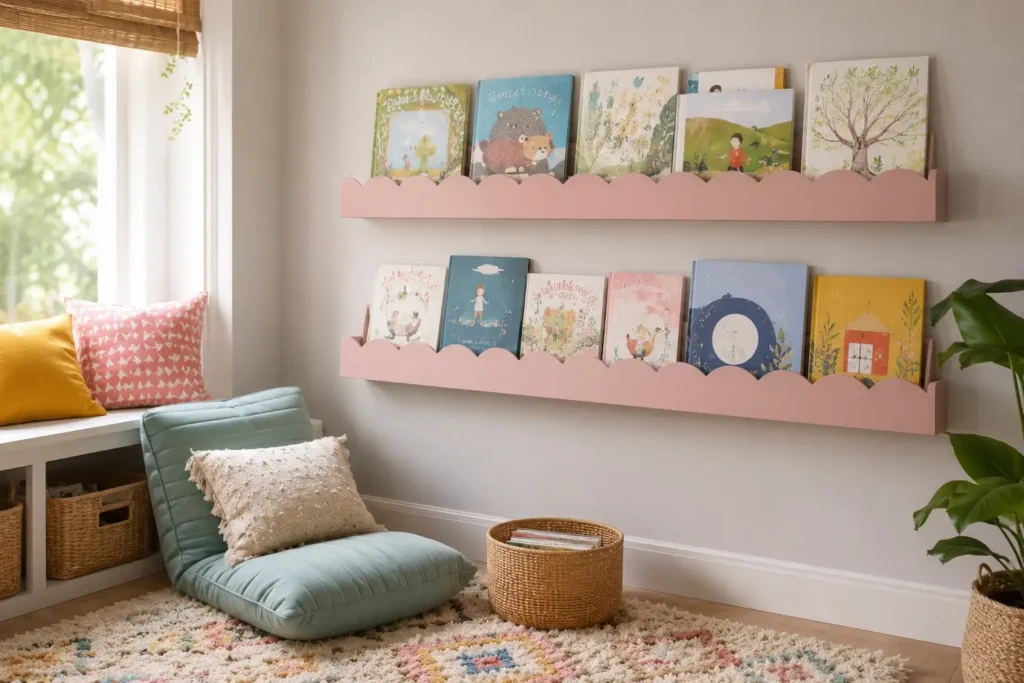
A reading nook is a small but powerful addition, especially for children who need a quiet wind-down before bed. A floor cushion, a beanbag or a window seat with a reading lamp and a forward-facing book ledge is enough. Place it between the sleeping area and the play area so it acts as a natural bridge from active play to rest.
How to Separate Study and Play Area in Kids Room Layouts
The biggest challenge in many homes is how to separate study and play area in kids room layouts where both zones sit side by side. You do not always need walls to do it. These simple techniques create clear boundaries:
Open shelving works particularly well because it divides the space and adds storage at the same time. Keep books and stationery on the study side of the divider and toys on the play side, so each zone faces its own things.
How to Create Zones in a Small Kids Bedroom
Many Dubai apartments have compact second and third bedrooms, so knowing how to create zones in a small kids bedroom is essential. The trick is to think vertically and choose multifunctional furniture that does more than one job.
The best layout for a small kids bedroom with study table usually places the bed along the longest wall, the desk under or beside the window, and keeps the centre of the room clear for play. If the room is very narrow, a loft bed with the desk tucked below can free up almost half of the floor area. Our guide to balcony design ideas for small bedrooms also shows how a small balcony can become an extra reading or play spot when the bedroom itself is tight on space.
How to Divide a Bedroom for Two Kids
Sharing a room teaches children to cooperate, but it also needs careful planning. When working out how to divide a bedroom for two kids, aim to give each child a personal space for sleeping and storing belongings, while sharing the study and play zones.
Bunk beds are the most common space-saving choice, though an L-shaped arrangement of two single beds works well in wider rooms and makes each bed feel more private. A central shelving unit or a half-height partition can split the sleeping zones, and individual reading lights, hooks and drawers give each child ownership of their side.
For siblings with a big age gap, a shared bedroom layout should also allow for different bedtimes. Position the older child’s desk away from the younger one’s bed and use a directional desk lamp so homework can continue after lights out.
How to Organize a Kids Room Into Zones That Last
Knowing how to organize a kids room into zones is only half the job. Keeping those zones working over time depends on smart storage solutions and a few simple habits.
Built-in joinery is often the most effective long-term option, because it can be designed to fit awkward corners, hide clutter and adapt as needs change. Families across central Dubai often work with us as their interior design company in Business Bay to plan custom wardrobes, desks and window seats around the exact dimensions of the room, from first drawings through to installation.
Multifunctional Kids Bedroom Ideas
A multifunctional kids bedroom gets more out of every square metre. These space-saving ideas work in almost any room size:
Kids Bedroom Zoning Checklist
Before you buy furniture or start painting, run through this quick checklist:
If you are unsure whether to plan it all yourself, our article on why you should hire professional interior designers in Dubai explains how expert input can save time, budget and costly layout mistakes.
A Room That Grows With Your Child
Knowing how to zone a kids bedroom turns a cluttered, multipurpose room into a space that supports good sleep, focused study and creative play. Start with a simple floor plan, give each activity its own area, and choose furniture and storage that can adapt over the years.
Small, thoughtful decisions add up. A well-placed desk, a calm corner for the bed and a play area with easy storage can make daily routines smoother for your child and less stressful for you. Plan the zones carefully today and the room will keep working for many years to come.